
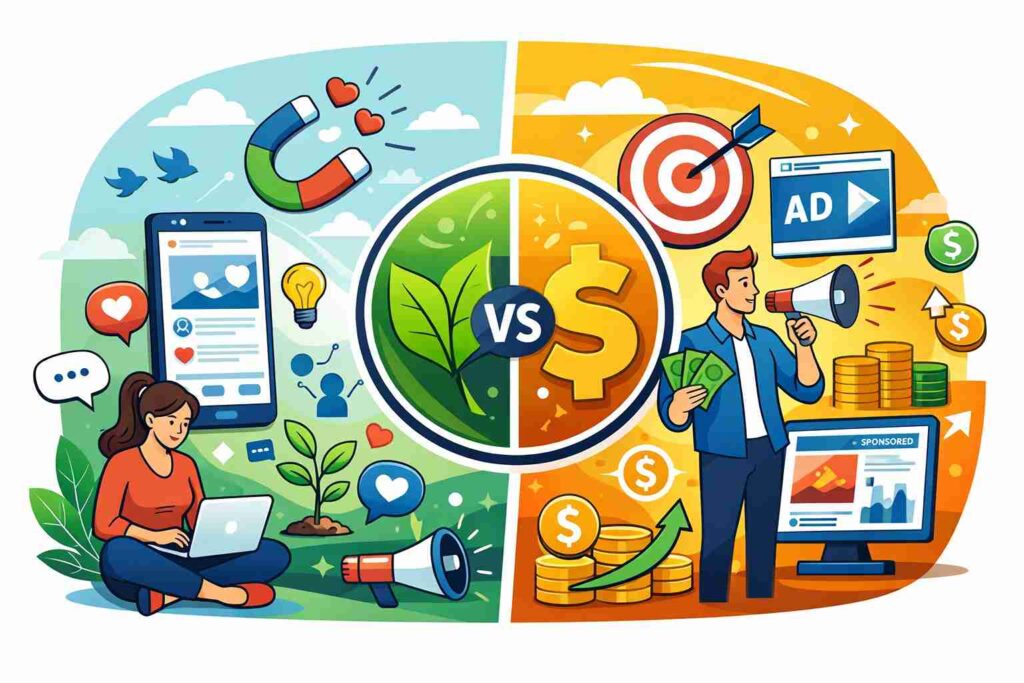
Social media marketing has evolved into one of the most effective ways businesses build visibility, engage customers, and drive growth online. However, many brands still struggle to understand the difference between organic vs. paid social media and how each contributes to success.
While some businesses rely on free content to grow audiences naturally, others invest in advertising to accelerate results. The truth is that organic and paid social media are not competing strategies; they are complementary tools that serve different marketing goals.
Understanding how they work together helps businesses create smarter, more sustainable social media strategies.
What Is Organic Social Media?
Organic social media refers to unpaid content shared on social platforms such as posts, reels, stories, and community interactions. Businesses publish content without paying to promote it and rely on platform algorithms and audience engagement to reach users.
Examples of organic social media include:
- Regular posts and updates
- Educational or entertaining videos
- Responding to comments and messages
- User-generated content and community discussions
One of the biggest advantages of organic social media is that it requires no advertising budget, allowing brands to maintain an online presence without upfront costs.
Benefits of Organic Social Media
- Builds trust and authenticity over time
- Strengthens customer relationships
- Creates long-term brand loyalty
- Cost-effective for startups and small businesses
Organic strategies focus on sustainable growth rather than immediate results.
What Is Paid Social Media?
Paid social media is advertising on platforms like Facebook or TikTok to promote content to targeted users.
Paid campaigns typically include:
- Sponsored posts
- Boosted content
- Video ads
- Retargeting campaigns
Sponsored social media, unlike organic posts, targets users by demographics, interests, and location to help businesses reach the right audience faster.
Benefits of Paid Social Media
- Immediate visibility and reach
- Advanced audience targeting
- Faster lead generation
- Detailed performance tracking
Paid strategies are especially useful for promotions, product launches, and scaling campaigns.
Organic vs. Paid Social Media: Key Differences
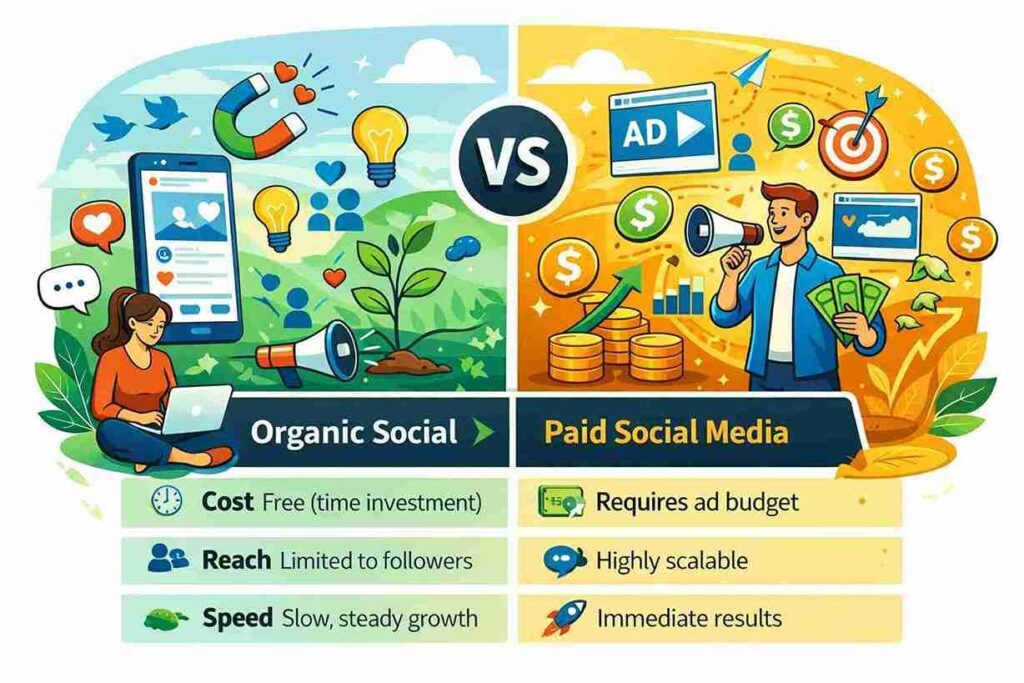
| Factor | Organic Social Media | Paid Social Media |
| Cost | Free (time investment) | Requires ad budget |
| Reach | Limited to followers | Highly scalable |
| Speed | Slow, steady growth | Immediate results |
| Goal | Engagement & trust | Traffic & conversions |
| Longevity | Long-term impact | Short-term boosts |
Organic marketing attracts audiences naturally, while paid advertising accelerates exposure through targeted promotion.
Why Organic Social Media Matters
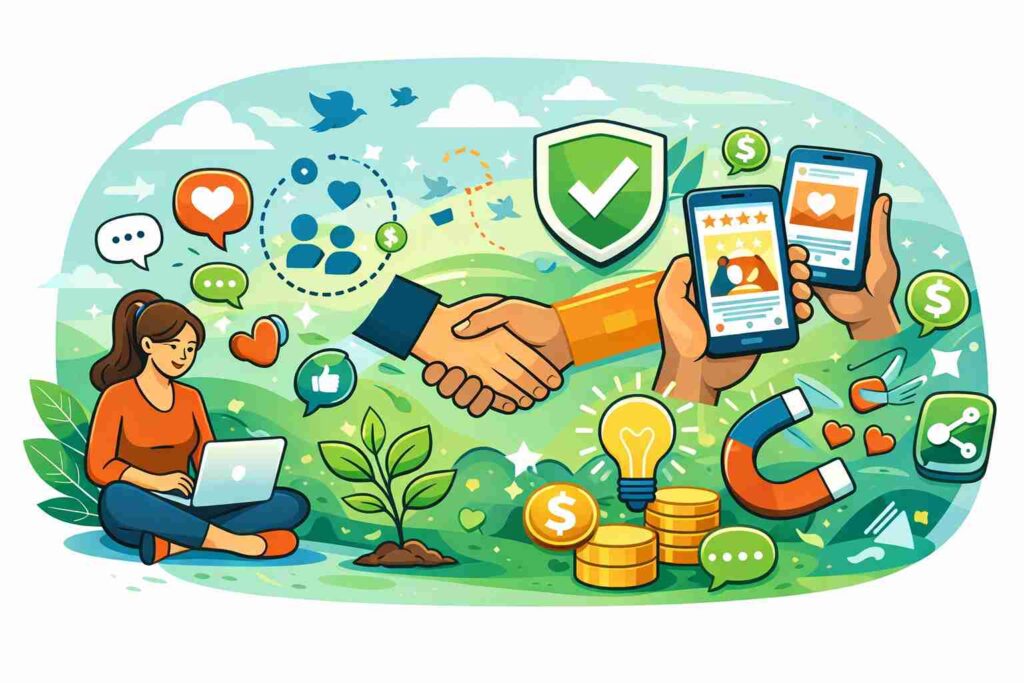
Organic social media plays a critical role in building brand credibility. Many consumers perceive organic content as more authentic and trustworthy than advertisements, making it effective for strengthening reputation and engagement.
Businesses benefit from organic efforts because they:
- Maintain consistent brand presence
- Build community and conversations
- Educate audiences without aggressive selling
Over time, organic content becomes a foundation that supports all other marketing efforts.
Why Paid Social Media Matters
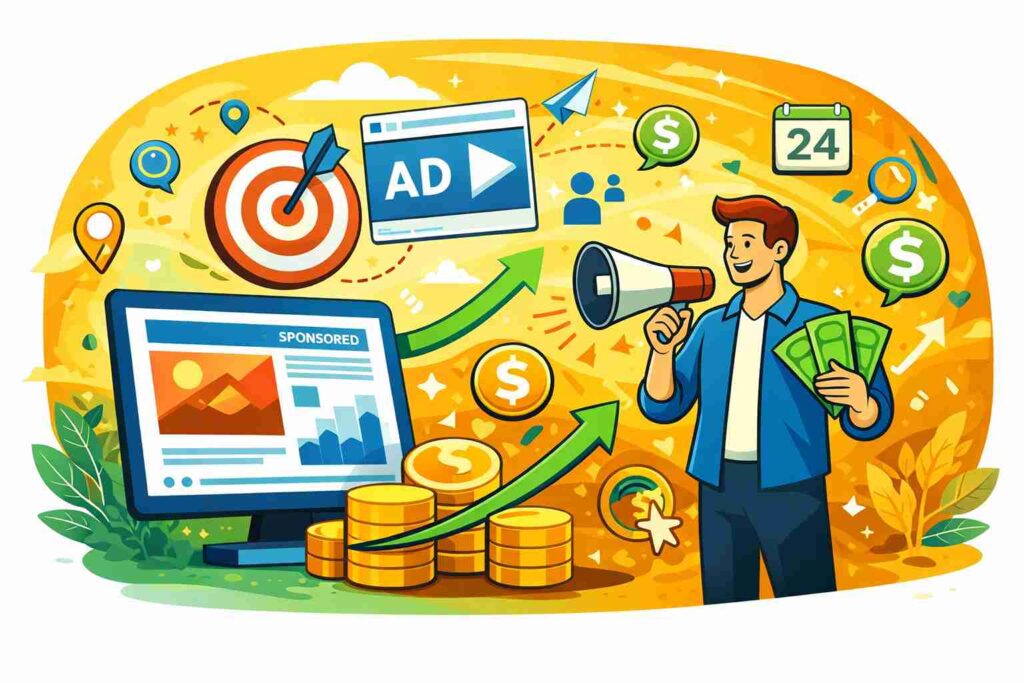
Paid social media fills the visibility gap created by declining organic reach. Advertising allows businesses to extend content beyond existing followers and reach entirely new audiences.
Paid campaigns help brands:
- Generate leads faster
- Promote time-sensitive offers
- Test audiences and messaging
- Measure ROI accurately
Paid social delivers speed and precision, making it essential for competitive markets.
Why the Best Strategy Combines Both
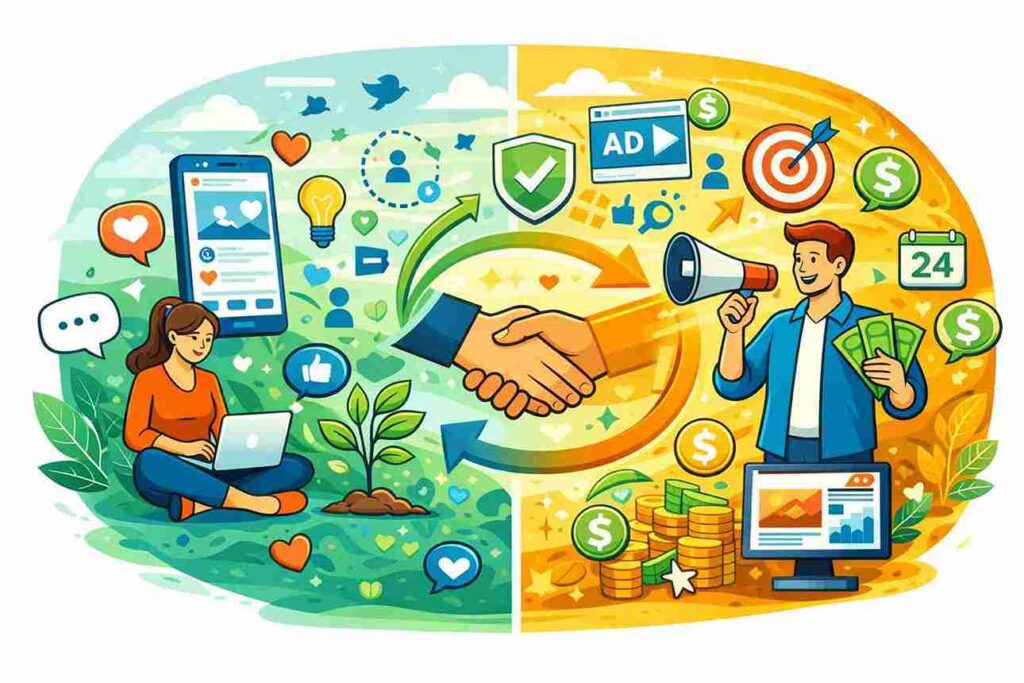
Industry experts increasingly emphasize that success doesn’t come from choosing one approach over the other. Organic social media builds relationships and trust, while paid campaigns amplify reach and conversions.
Research shows that organic content nurtures engagement while paid promotion accelerates visibility, creating a balanced marketing ecosystem.
When combined:
- Organic content builds credibility
- Paid ads attract new audiences
- Together, they create a full customer journey from discovery to purchase
When to Use Organic vs Paid Social Media
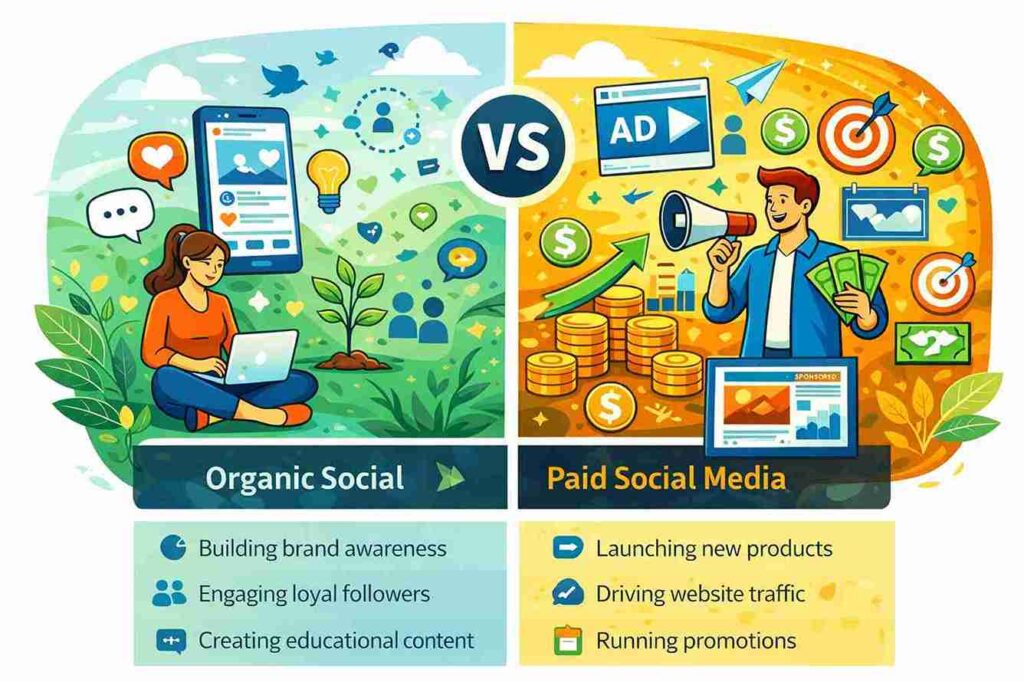
The best time to use Organic Social Media:
- Building brand awareness
- Engaging loyal followers
- Creating educational or storytelling content
- Operating with limited budgets
Apply paid Social Media When:
- Launching new products
- Driving website traffic quickly
- Running seasonal promotions
- Scaling growth rapidly
Use Both When:
- Expanding reach while maintaining trust
- Supporting long-term and short-term goals simultaneously
Why Social Media Marketing Matters Today
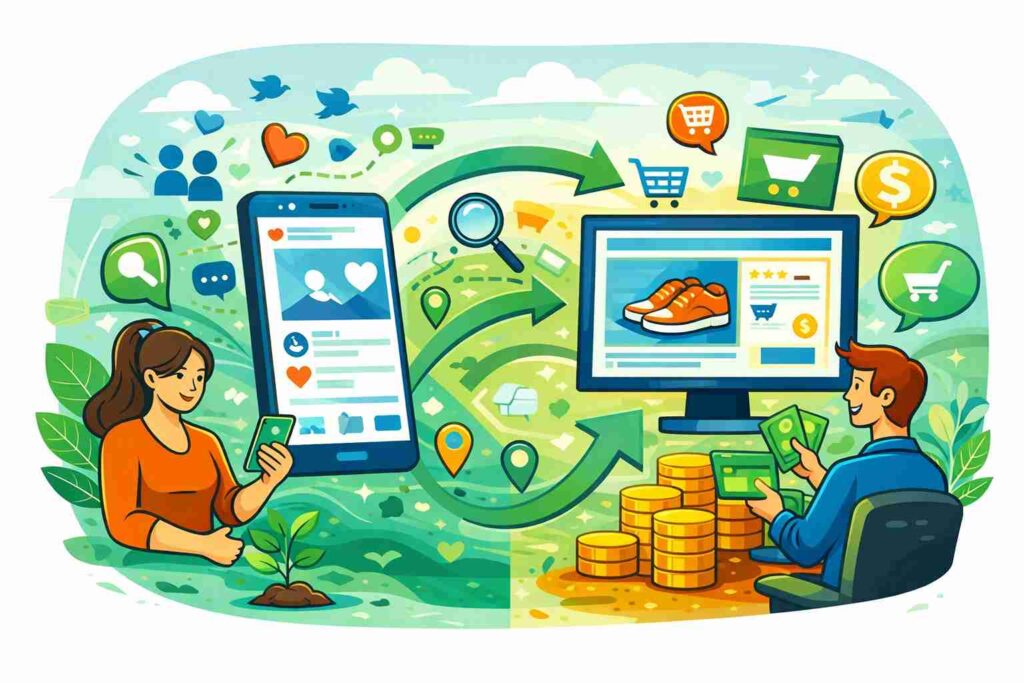
Modern consumers discover brands, research products, and make purchasing decisions through social platforms. Businesses that understand organic vs. paid social media gain a competitive advantage by balancing authenticity with strategic promotion.
Organic content creates a connection. Paid campaigns create momentum. Together, they form a powerful engine for sustainable growth.
The Bottom Line
The debate around organic vs. paid social media isn’t about choosing a winner. Each approach serves a unique purpose within a successful marketing strategy.
Organic social media builds relationships, credibility, and long-term brand value. Paid social media delivers speed, targeting, and measurable results. As businesses integrate both strategies, they gain greater visibility, foster deeper engagement, and achieve stronger marketing performance overall.
In today’s digital landscape, mastering the balance between organic and paid social media isn’t optional; it’s essential.