
Introduction
Marketing is evolving at a breakneck pace. But even as digital tools multiply, traditional channels still hold sway in many contexts. In this post, we’ll explore traditional marketing vs digital marketing, what each involves, how they differ, their strengths and limitations, and how to decide which works best for your business or audience.
What Is Traditional Marketing?
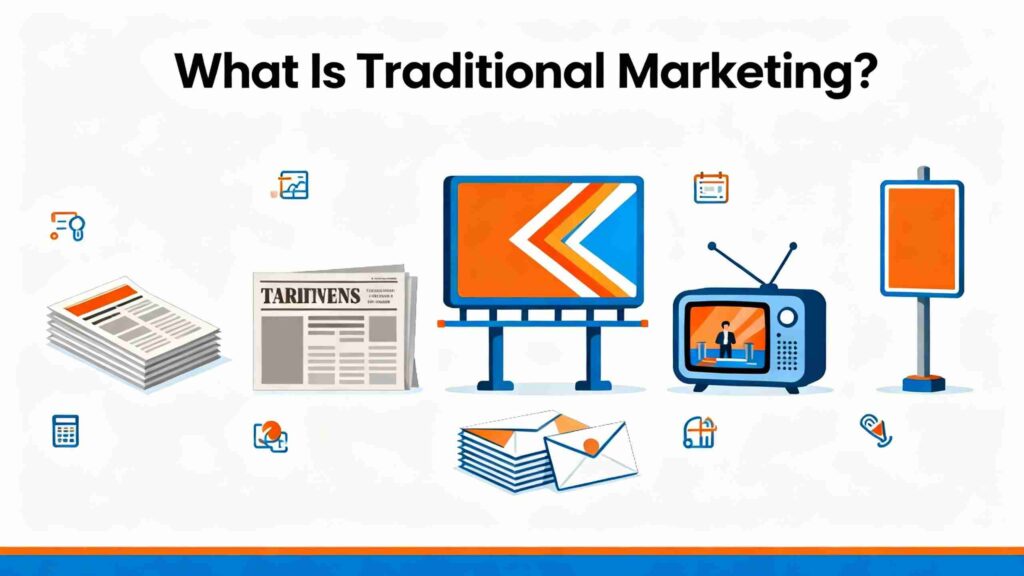
Traditional marketing refers to offline, non-Internet-based methods of reaching consumers. Examples include:
- Print ads in newspapers or magazines
- Broadcast media: TV commercials, radio spots
- Outdoor advertising: billboards, public transit ads
- Direct mail, cold-calling, and flyers.
Key characteristics:
- Primarily one-way communication (brand consumer)
- Reach is often geographic or local in nature.
- Measurement and tracking of results may be more difficult.
- Effective for certain audiences (e.g., older demographics) or contexts.
What Is Digital Marketing?
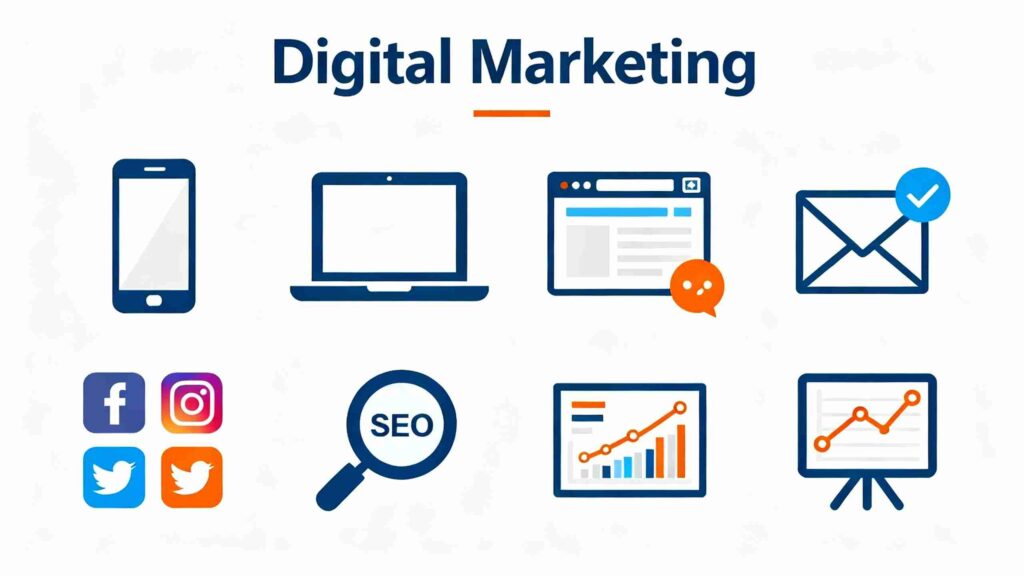
Digital marketing uses internet-based channels and electronic devices to connect with consumers. Common forms include:
- Website content, blogs, SEO.
- Social media marketing.
- Email campaigns, mobile marketing (apps, SMS).
- Pay-per-click (PPC), affiliate marketing.
- Analytics and conversion tracking.
Characteristics include:
- Two-way interaction: audience engagement, feedback loops.
- Real-time data, rapid iterations possible.
- Global reach and scalability (depending on budget and strategy).
- Frequently, lower cost of entry (compared to some traditional channels) and high targeting precision.
Traditional Marketing vs Digital Marketing — Key Differences
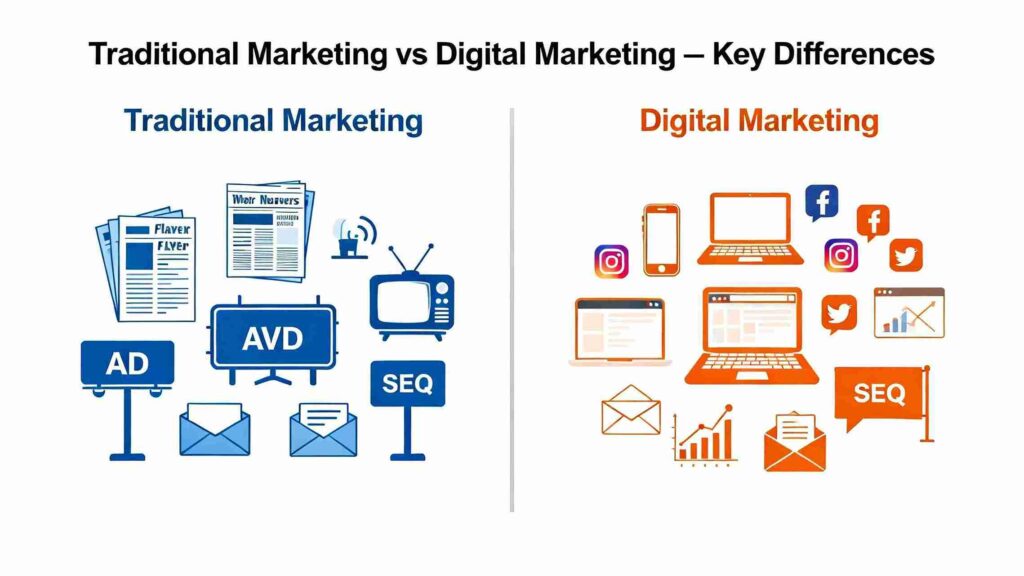
Here’s a comparison of the two approaches:
Benefits & Limitations of Each
Traditional Marketing
Pros:
- Strong at reaching local or older audiences who may rely less on digital channels.
- Familiar format; sometimes perceived as more “credible” or established.
- Good for brand awareness and mass exposure (TV, radio).
Cons:
- Difficulty in measuring ROI accurately; limited tracking of consumer behaviour.
- High cost, slower impact.
- Less targeting precision, more waste (ads reach non-relevant audience).
Digital Marketing
Pros:
- Precise targeting, real-time metrics, and optimisation.
- Lower cost barriers; scalable for small businesses.
- Ability to engage, personalise and build long-term relationships.
- Global reach and adaptability.
Cons:
- Highly competitive — many brands fight for attention online.
- Rapid change — digital channels evolve quickly, tactics that worked yesterday may not work tomorrow.
- Over-reliance on technology may exclude audiences with limited internet access.
Which One Should You Use?
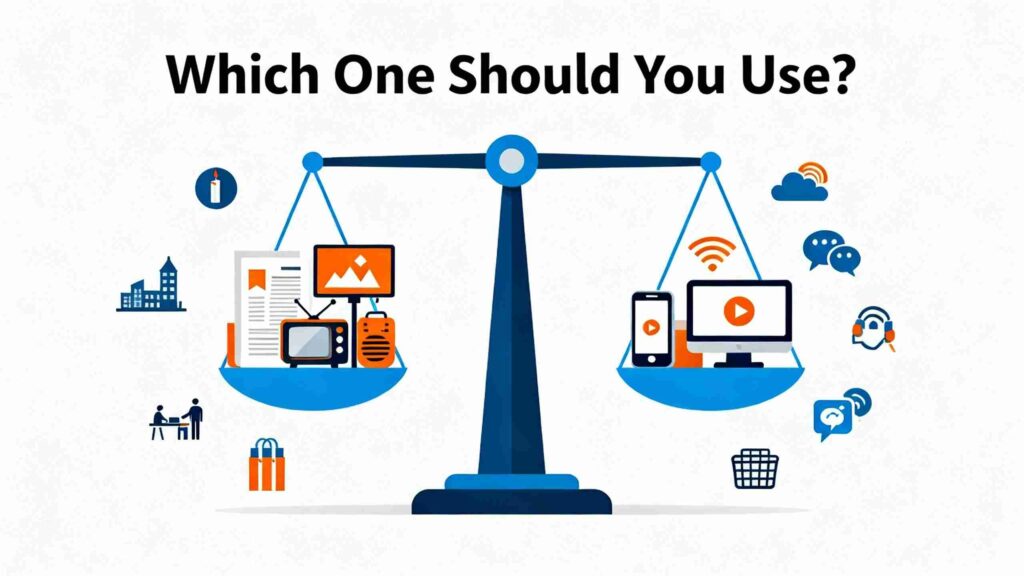
There is no one-size-fits-all answer to the question of traditional marketing vs digital marketing. The best approach depends on:
- Who your audience is: What media do they consume? Are they online? Do they watch TV, read newspapers?
- Where are they: Local or global, urban or remote?
- Your budget and timeframe: Do you need quick, measurable results or long-term brand building?
- Your goals: Awareness vs engagement vs conversion vs retention.
- Your resources & expertise: Do you have digital tools, analytics, and a team for online campaigns?
In many cases, the most effective strategy is an integrated approach: with the combination of traditional and digital marketing in a coordinated way (sometimes called “omnichannel” or “integrated marketing”).
For example, using digital ads to drive traffic and conversions, while supporting the brand via more visible traditional media in your local market.
Tips for Implementation
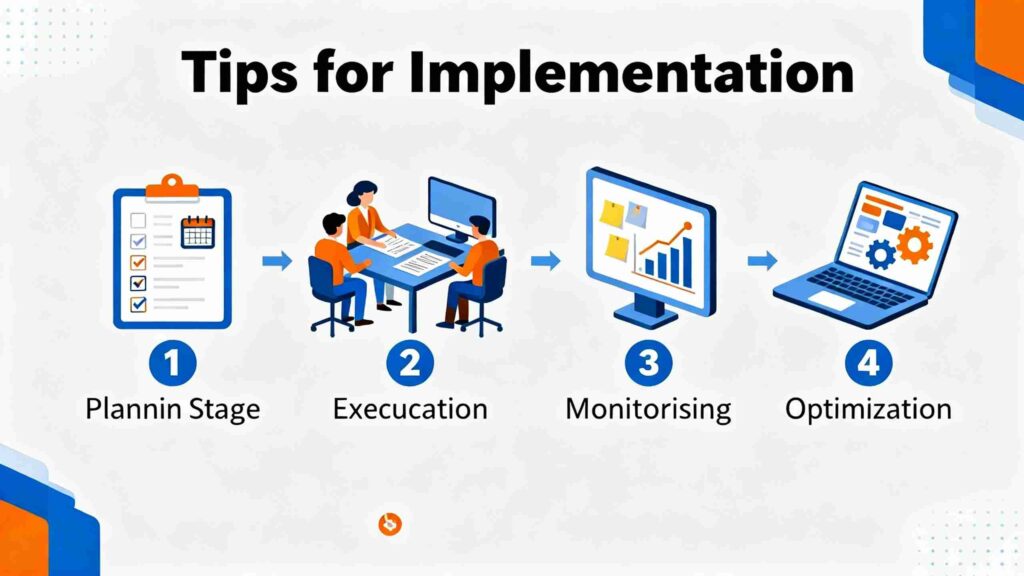
- Map your customer journey: Where do your prospects encounter your brand? Understand both offline and online touchpoints.
- Set clear metrics: Digital offers many metrics (clicks, conversions, bounce rates); for traditional channels, define proxies (coupon codes, phone numbers, QR codes).
- Allocate budget wisely: Split based on channel effectiveness, test small before a large investment.
- Ensure consistency: Regardless of channel (print, email, social), maintain brand voice and messaging for a unified experience.
- Leverage data and feedback: Use digital analytics to inform both digital and traditional decisions. Iterate and improve.
- Audience segmentation: Use digital to micro-target, traditional for broader brand reach or less-digitally-connected segments.
- Track integration effects: See how offline efforts drive online behaviour (e.g., someone sees a billboard, then searches your brand).
Final Thoughts
In the debate of “traditional marketing vs digital marketing”, the key takeaway is that neither is inherently “better” in all cases. Each serves unique roles and advantages. But for most modern businesses, digital marketing is indispensable; however, traditional methods still have a place, especially when aligned with target audience behaviours and market context.
By thoughtfully combining both and making data-driven decisions, you’ll maximise reach, engagement, and return, staying flexible in an ever-changing marketing landscape.
For more resources about SEO, please visit https://www.lynderdigital.com/seo-resources/