
In today’s digitally connected world, social media isn’t just a place where people socialize it’s a powerful marketing channel that brands use to reach audiences, build relationships, and drive business growth. But with so many platforms and tactics available, what are some social media marketing strategies that actually work? In this comprehensive guide, we’ll explore the most effective ways to approach social media marketing in 2026.
What Is Social Media Marketing?
Social media marketing (SMM) refers to using social platforms like Facebook, Instagram, TikTok, LinkedIn, and Twitter to connect with your audience, promote your products or services, and build your brand online. Unlike traditional advertising, social media emphasizes two-way interaction where brands and customers engage in dialogue rather than one-way messaging.
In essence, social media marketing blends content creation, community engagement, advertising, and analytics into a coordinated strategy that drives real business results.
Why You Need a Social Media Strategy
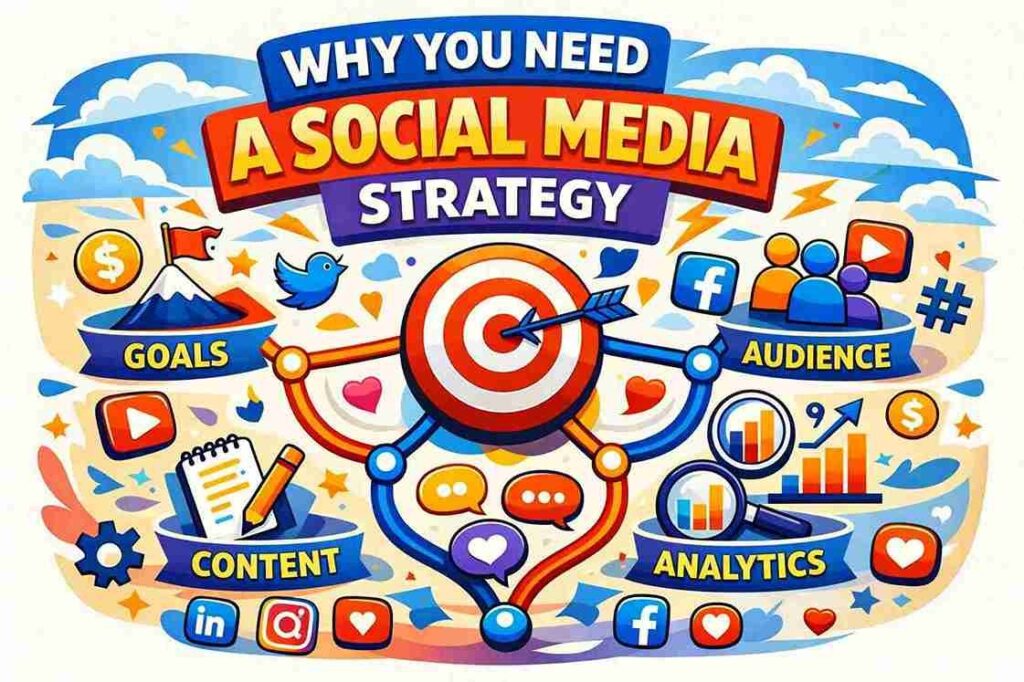
Simply posting on social media isn’t enough. A well-defined strategy helps you:
- Align social efforts with business goals like sales, brand awareness, or customer engagement.
- Target the right audience on the right platforms and deliver content tailored to their interests.
- Measure performance with metrics such as reach, engagement, and conversions.
- Stay consistent and competitive in a crowded digital landscape.
A strategy gives your social media presence purpose and structure and ensures you’re not just posting, but posting with impact.
What Are Some Social Media Marketing Strategies?
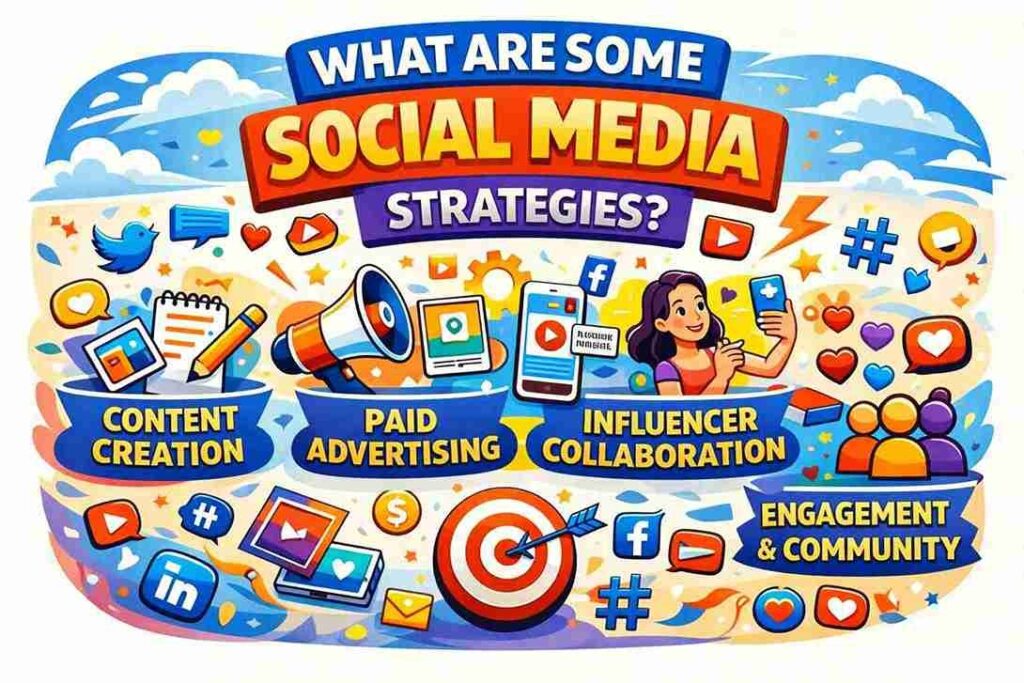
Here are some of the most effective strategies that successful brands use:
1. Define Clear Goals and KPIs
Start by deciding what success looks like. Are you increasing brand awareness, driving traffic to your website, generating leads, or boosting sales? Then choose KPIs such as engagement rate, follower growth, click-throughs, or conversions that let you track performance.
2. Know Your Target Audience
Understanding who your audience is (age, location, interests, online behavior) helps you choose the right platforms and craft messages that resonate. Tools like platform analytics can give you detailed insights.
3. Select the Right Platforms
Not every social network fits every business. For example:
- Instagram and TikTok excel at visual storytelling and short-form video content.
- LinkedIn is ideal for B2B marketing and professional networking.
- Facebook suits a broad reach and community building.
- YouTube fuels video search and long-form educational content.
4. Create Engaging Content
Content is the heart of your strategy. Some proven content types include:
- Educational posts (tips, how-tos)
- Behind-the-scenes stories
- User-generated content (UGC)
- Short videos and Reels
- Interactive posts (polls, Q&As)
Good content should inform, entertain, or inspire — not just sell. It should add value to your audience’s social experience.
5. Use Paid Advertising Strategically
Paid ads on social media help you reach users beyond your real followers. Options include:
- Boosted posts
- Targeted ads by demographics or behavior
- Retargeting campaigns to re-engage people who already interacted with your brand
Paid strategies can accelerate visibility and conversions when paired with strong organic content.
6. Leverage Influencer Partnerships
Influencers from micro to macro can lend authenticity to your brand and expand your reach. Collaborative content can boost both trust and engagement among niche audiences.
7. Monitor and Analyze Performance
Regularly reviewing your analytics helps you see what works and what doesn’t. Metrics like engagement rate, reach, impressions, and conversion data let you refine your strategy over time.
8. Build Community and Engage
Social media isn’t just broadcasting — it’s a conversation. Actively respond to comments, messages, and mentions; host live sessions; and create communities that strengthen customer loyalty.
Key Takeaways
When asking “what are some social media marketing strategies?” the answer lies in planning, execution, and measurement. The best strategies:
- Align with business goals
- Are tailored to the audience’s needs
- Mix organic and paid tactics
- Use data to drive decisions
- Focus on engagement, not just impressions
By implementing these approaches consistently and thoughtfully, you can build a social media presence that drives growth and builds meaningful relationships with your audience.