
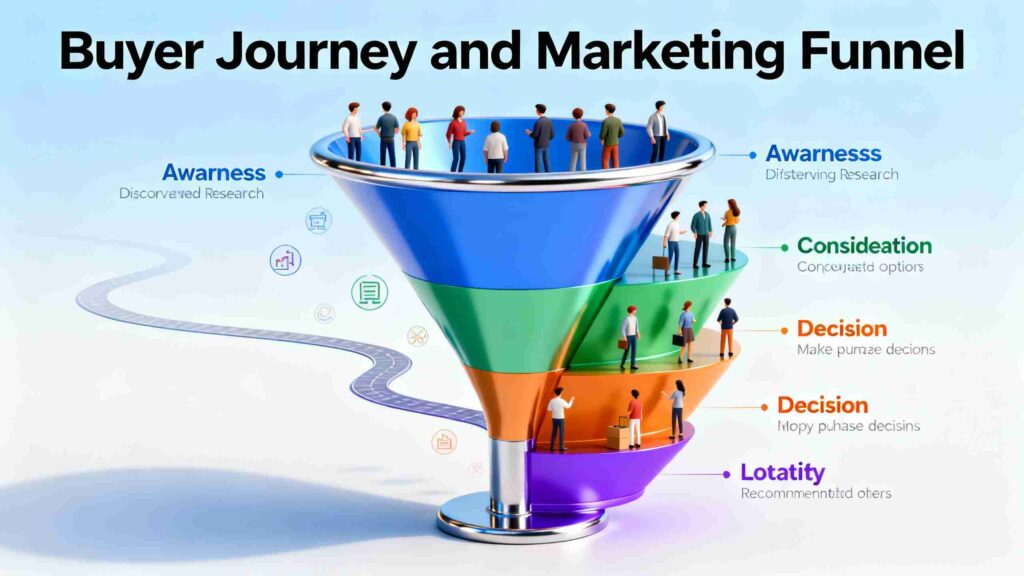
In today’s dynamic digital landscape, understanding how a potential customer moves from the first spark of interest to a loyal advocate is important. At the heart of this process lies the concept of the digital marketing funnel, a model that helps businesses structure their marketing efforts and the equally crucial idea of the buyer journey, which represents the experience the customer actually goes through.
In this blog post, we’ll explore how the buyer’s journey and the digital marketing funnel relate to each other, how they differ, and how you can use them together to create more effective digital marketing strategies.
What Is the Buyer’s Journey?
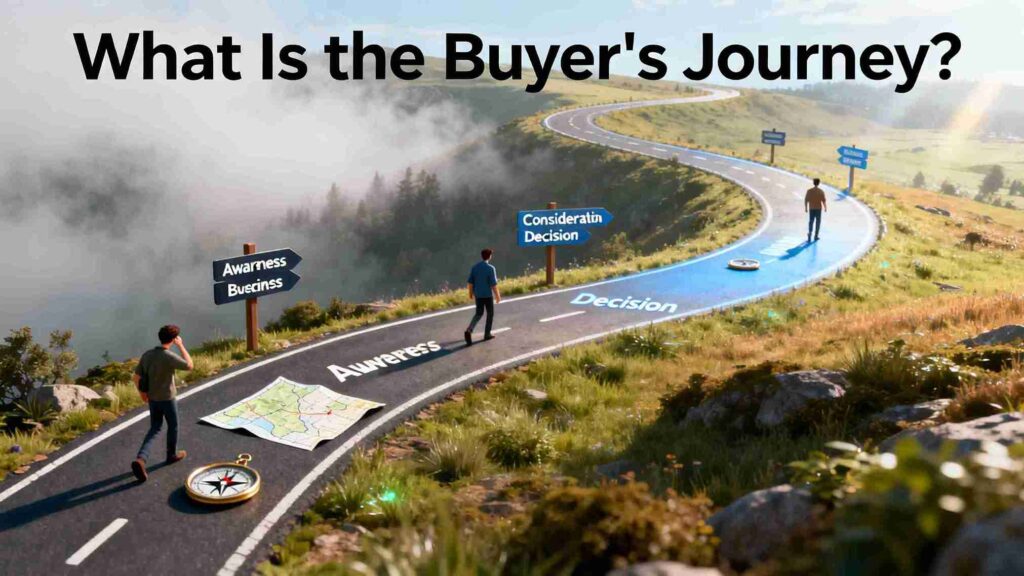
The buyer’s journey is the path that a person takes from becoming aware of a problem to researching options, to making a decision, and eventually becoming a customer (and possibly an advocate). Typically, it’s segmented into these stages:
- Awareness: The buyer realises they have a need or problem
- Consideration: They explore potential solutions and evaluate different options.
- Decision: They are ready to choose a solution and select a vendor or product. Some frameworks extend this journey beyond purchase to include Retention and Advocacy, reflecting the post-purchase behaviour and relationship-building.
The key point: the buyer’s journey is customer-centric. It models what the customer is thinking, feeling, doing, and which touchpoints they’re going through.
What Is the Digital Marketing Funnel?
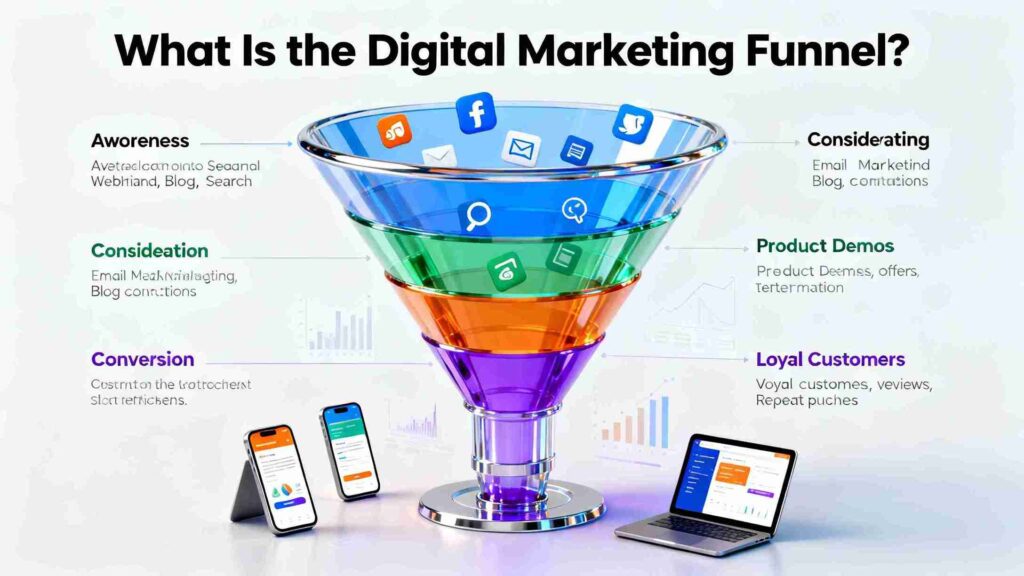
The digital marketing funnel (or simply “marketing funnel”) is a model that breaks down how you, as a marketer or business, guide prospects through stages of engagement, from awareness to conversion (and often beyond). Common stages and how they are often labelled include:
- Top of Funnel (ToFu): Generating awareness, attracting a broad audience.
- Middle of Funnel (MoFu): Engaging, educating, nurturing those who are aware but not yet ready to buy.
- Bottom of Funnel (BoFu): Encouraging decision or purchase action.
- Some models then include Retention and Advocacy post-purchase. From a digital perspective, the funnel helps you align marketing channels, content, and tactics (search, social, email, retargeting) to each stage and move the prospect deeper toward conversion.
Buyer Journey vs. Marketing Funnel: Similarities and Differences
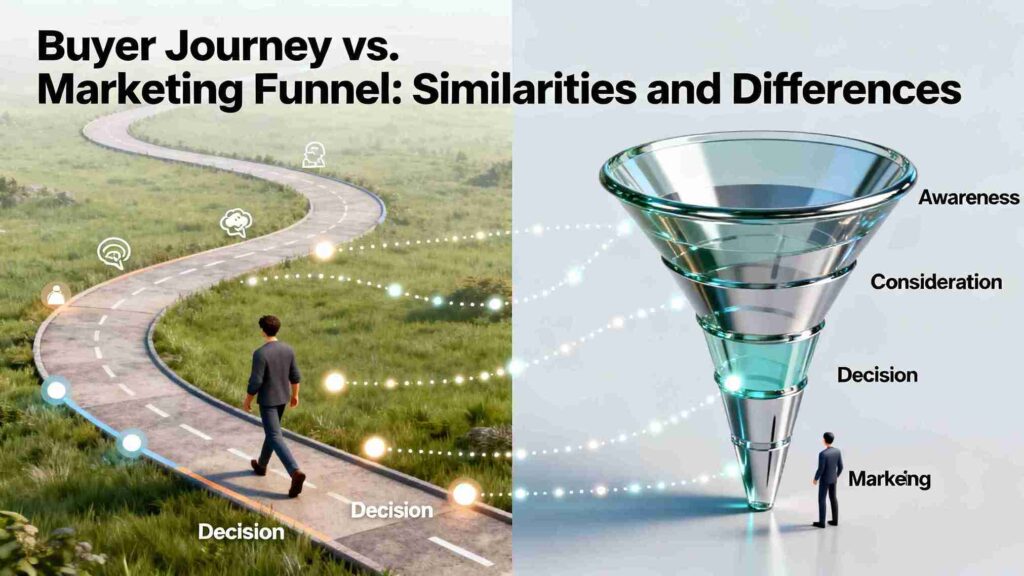
While the buyer’s journey and the digital marketing funnel are closely related, they serve different perspectives and purposes. Here’s a comparison:
| Aspect | Buyer’s Journey | Digital Marketing Funnel |
| Perspective | Customer-led: what the buyer goes through. | Business-led: how you structure your marketing process. |
| Focus | Emphasis on experience, touch-points, and the decision-making process. | Emphasis on conversion, lead flow, and moving people along stages. |
| Path structure | Often non-linear: buyers may jump between stages, loop back, or use different channels. | Often depicted as a linear funnel (awareness → consideration → decision), though modern versions recognise flexibility. |
| Scope | Can cover pre-purchase, purchase, and post-purchase (retention, advocacy). | Traditionally ends at conversion/purchase, but many models now extend into retention/advocacy. |
| Use case | Helps understand the buyer’s mindset, create relevant touch-points, and content for what they need. | Helps plan and optimise marketing tactics, allocate budget, and measure funnel metrics. |
The key takeaway: The buyer’s journey and the digital marketing funnel should not be seen as competing models; they complement each other. A good marketing strategy uses the funnel to orchestrate how you guide prospects, while mapping the buyer’s journey ensures you meet them where they are, with content and experience that matter.
Mapping the Digital Marketing Funnel Along the Buyer’s Journey
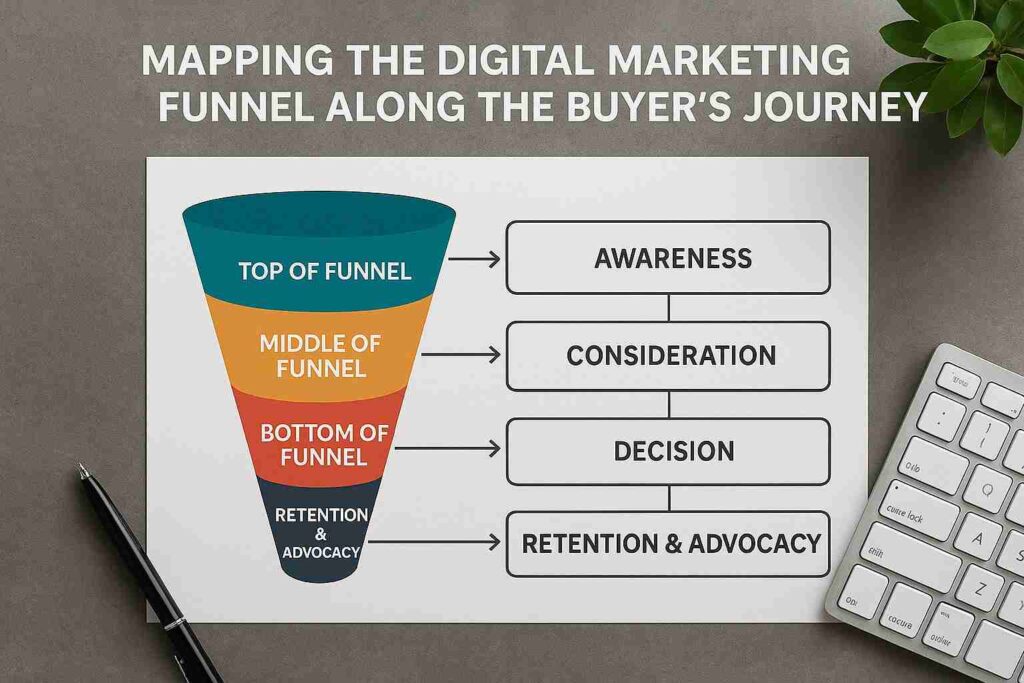
To illustrate how the buyer’s journey and the digital marketing funnel align, let’s map a typical scenario:
- Awareness Stage (Buyer’s Journey) / Top of Funnel (Marketing Funnel)
- The buyer realises they have a problem or need.
- Marketing focus: brand awareness, problem definition, and attracting traffic.
- Tactics: blog posts, social media content, search ads for informational queries.
- Goal: move the audience to consideration.
- The buyer realises they have a problem or need.
- Consideration Stage / Middle of Funnel
- Buyer researches options and compares solutions.
- Marketing focus: educate, nurture, build trust and credibility.
- Tactics: comparison guides, webinars, case studies, retargeting ads.
- Goal: move prospects toward a decision.
- Buyer researches options and compares solutions.
- Decision Stage / Bottom of Funnel
- The buyer decides to select a solution and vendor.
- Marketing focus: reduce friction, provide proof, offer incentives, enable purchase.
- Tactics: free trials, demos, discount offers, strong CTAs.
- Goal: conversion/purchase.
- The buyer decides to select a solution and vendor.
- Post-Purchase: Retention & Advocacy
Why This Alignment Matters in Digital Marketing
- Better content mapping: When you know both frameworks, you can create content that resonates by stage, so you don’t try to sell immediately when a buyer is just becoming aware.
- Improved customer experience: By tracking the buyer’s journey, you reduce friction, meet needs, and build trust, which in turn improves conversion through the funnel.
- Holistic measurement: You can track funnel metrics (conversion rates, drop-offs) and also monitor journey metrics (touch-points, channel paths, time between stages).
- Resource efficiency: Instead of randomly deploying tactics, you allocate efforts based on where your prospects are in their journey and what the funnel stage requires.
- Competitive differentiation: Many businesses still treat acquisition only; those that extend into retention/advocacy and focus on journey mapping will outpace competitors.
Practical Tips to Optimize Your Digital Marketing Funnel & Buyer Journey
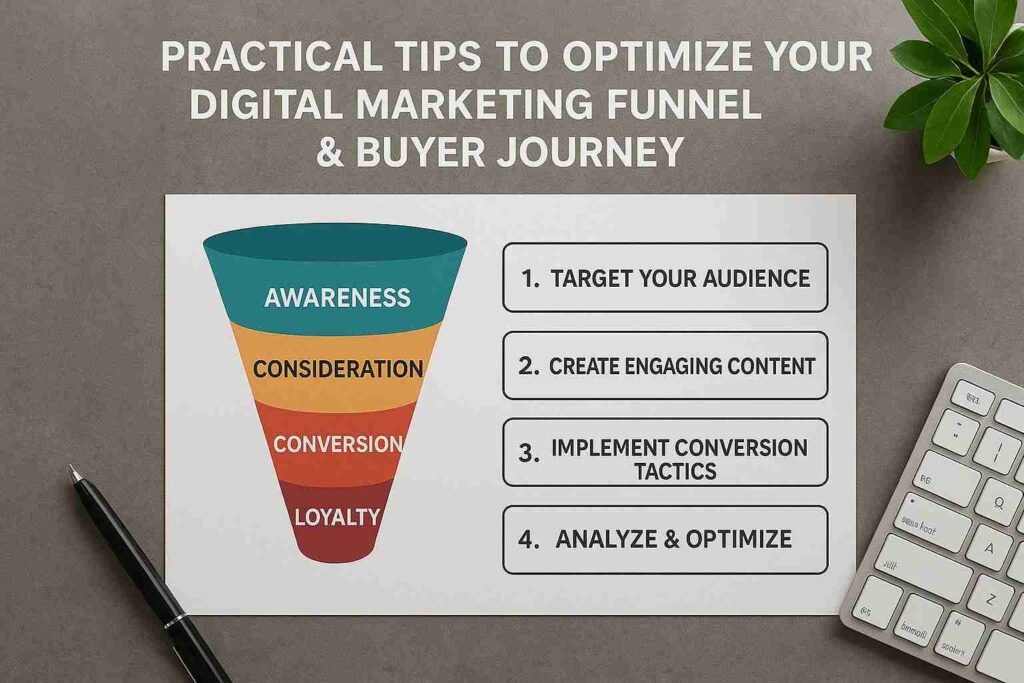
- Map your buyer personas: Understand who your buyers are, what problems they face, and what their decision criteria are.
- Draw both frameworks: Make a simple chart that links buyer journey stages, funnel stages, marketing goals, and tactics.
- Audit your content/touch-points: Do you have assets for each stage (awareness, consideration, decision)? Are you meeting buyer needs at each stage?
- Monitor the drop-off points: In your funnel, where are prospects getting stuck or abandoning? On the buyer’s journey side, where are buyers giving up or going elsewhere?
- Extend beyond purchase: Don’t stop after conversion. Focus on onboarding, retention, and advocacy to maximise lifetime value.
- Be flexible and data-driven: Modern buyers don’t always follow linear paths. Use analytics to understand real-world journey patterns and adapt your funnel accordingly.
- Align teams across stages: Marketing, sales, and customer success should all operate with a shared understanding of both journey and funnel, to reduce gaps and silos.
Conclusion
The digital marketing funnel is a powerful framework for structuring how you move prospects toward conversion, and the buyer’s journey offers the customer-centric perspective of how people actually think, act, and interact throughout that process. When you align both and take into account post-purchase retention and advocacy, you build a stronger, more sustainable marketing strategy.
By keeping the customer’s needs and behaviours at the center (the journey) while optimising your funnel for efficient flow and conversion, you’ll be better positioned to attract the right audience, engage them meaningfully, convert them effectively, and keep them coming back as advocates.
For more resources about SEO, please visit https://www.lynderdigital.com/seo-resources/